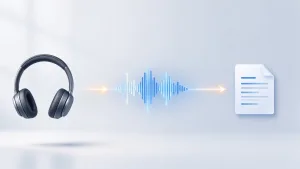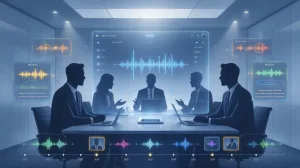
To create meeting notes from audio, first turn the recording into a searchable transcript. Then use the transcript to organize the discussion into decisions, action items, owners, deadlines, and open questions. Finally, check important details against the original audio before sharing the notes.
This workflow works for internal meetings, client calls, research conversations, and recorded briefings. Good meeting notes should help people act faster without disconnecting decisions, owners, and commitments from the original conversation.
Why Audio Alone Does Not Make Useful Meeting Notes
A recording preserves the conversation, but it does not make the outcome easy to use. When people need to remember what was decided, find a commitment, or prepare a follow-up, a 45-minute audio file is slow to scan.
| What people have | What they need | The gap |
| A full recording | A concise recap | Listening again to find the few moments that matter. |
| A raw transcript | Clear decisions and follow-ups | Important points are spread across pages of dialogue. |
| An AI summary | Reliable notes for the team | A summary can omit context or compress several ideas together. |
Good notes bridge that gap. They reduce review time without pretending that the original conversation no longer matters.
Who Benefits From Meeting Notes Created From Audio?
| User | Typical pain | Useful output |
| Managers and project leads | Decisions and responsibilities get lost after fast-moving meetings. | Decisions, owners, deadlines, and unresolved questions. |
| Remote and distributed teams | Not everyone attends live, and time zones make replaying calls inefficient. | A shareable recap that points people to the issues they need to review. |
| Client-facing teams | Client requests, constraints, and promises are buried across calls. | A structured call recap, with important wording checked before it is relied on. |
| Researchers and interviewers | Long conversations contain themes and follow-up ideas that are hard to compare. | Topic-based notes plus a transcript for detailed evidence review. |
| Podcasters | An episode needs show notes, key topics, and a clean listener-facing description. | A first-pass episode outline and show notes draft, reviewed for names, claims, and timestamps. |
Meeting Notes, Transcripts, and Show Notes Do Different Jobs
These outputs can come from the same audio file, but they should not be treated as interchangeable.
| Output | Primary purpose | What to verify |
| Transcript | Detailed record for search, correction, and review. | Names, terminology, speaker attribution, and important wording. |
| Meeting notes | Make decisions, action items, owners, and open questions easy to act on. | Whether a decision was actually made and who agreed to do what. |
| Podcast show notes | Help listeners understand an episode and find its main topics or resources. | Guest names, links, factual claims, quotes, and timestamps. |
A Practical Workflow for Creating Meeting Notes from Audio
Use this process whether you are starting with a new recording or an existing audio file.
- Capture or import the audio. Make sure your recording method, consent process, and use of the recording fit the meeting, participants, platform rules, and applicable policies.
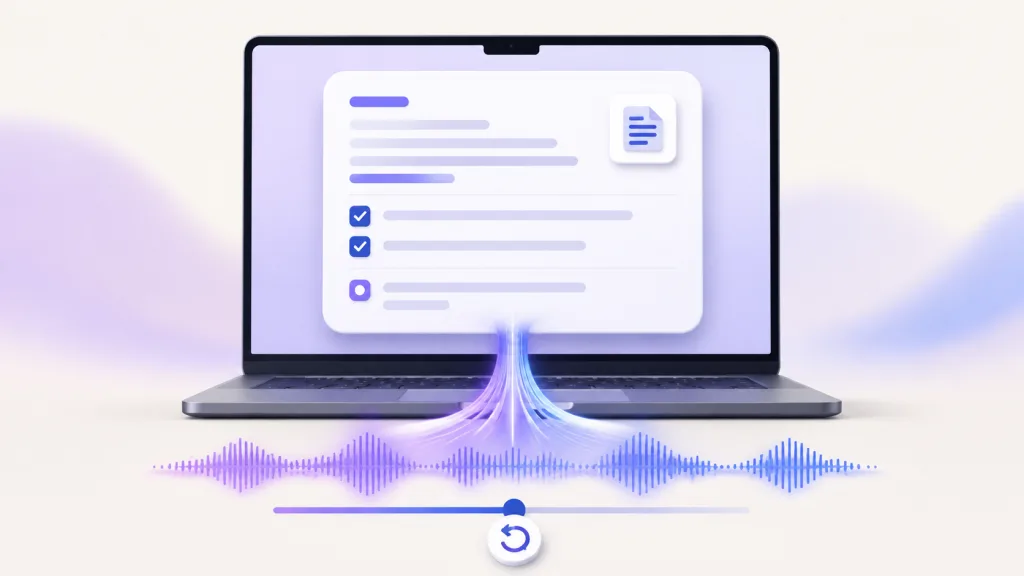
- Generate a transcript. For long discussions, searchable text is the fastest way to find names, decisions, project terms, or a specific question later.
- Create a first-pass summary or outline. Use it to see the shape of the conversation, not as final proof of what was said.
- Turn the outline into notes with a predictable structure: decisions, action items, owners, deadlines, context, and open questions.
- Search the transcript and listen back to the relevant audio before finalizing commitments, numerical details, quotes, or sensitive statements.
- Share the note with clear status: final decisions, working assumptions, and items that still need confirmation.
A Simple Meeting Notes Template
A reusable format prevents notes from becoming a rewritten transcript. Keep the structure short enough that people will actually read it.
| Section | What to include |
| Meeting context | Date, attendees, purpose, and project or client name. |
| Key decisions | What was agreed, including any conditions or constraints. |
| Action items | Task, owner, due date, and the next review point. |
| Open questions | What remains unresolved and who will clarify it. |
| Source check | Transcript terms or timestamps to revisit before a high-stakes decision or external communication. |
| Optional related use case The same workflow can also help podcasters draft show notes. Keep it secondary to meeting-note needs, and check names, links, claims, quotes, and timestamps before publication. |
How Geode Helps Turn Audio Into Notes
Geode is designed for people who want meeting notes to stay connected to the source. Start with a searchable transcript, use AI summaries as a first-pass outline, and return to timestamped audio whenever a decision, commitment, or quote needs checking. On Mac, AI summaries can be generated on-device; on other supported platforms, summary availability and processing mode may differ.
For ordinary meeting notes, use the summary as a first-pass outline and build the final note around the decisions and actions that matter. Where supported, search the transcript and use timestamped segments to return to the audio whenever a detail needs checking.
For interview-style conversations, where supported, key summary items in Geode’s Interview summary template can include timeline references that help users return to the relevant audio segment. This is useful for interviews and research calls; it does not mean every summary sentence is a source-cited or verbatim statement.
Speaker separation on supported desktop platforms can also make multi-person transcripts easier to follow. It organizes text by speaker label, but speaker identity and important attribution should still be reviewed manually.
| Try Geode with one real recording Create a searchable transcript, draft structured notes, and, where supported, use timestamps to check the decisions, owners, and commitments before you share them. |
Common Mistakes to Avoid
- Copying an AI summary directly into a client update without checking the underlying conversation.
- Listing action items without a named owner or due date.
- Treating a speaker label as confirmed identity without review.
- Using a raw transcript as the final meeting note when the team needs a short, actionable record.
- Sharing notes before checking names, links, claims, and timestamps when they matter.
Conclusion
Creating meeting notes from audio is not about replacing the conversation with AI-generated text. It is about making the useful outcome of that conversation easier to find, check, and act on.
Start with a transcript, use a summary to get oriented, turn it into structured notes, and return to the audio whenever an exact detail matters. The result is less searching, clearer next steps, and meeting notes that stay connected to the original conversation.
How do I turn audio into meeting notes?
Transcribe the recording, create a short outline of the discussion, organize it into decisions and action items, then check important details against the transcript and original audio before sharing.
Can AI create meeting notes from audio?
Yes. AI can turn a transcript into a concise first-pass recap. It is useful for finding decisions, themes, and follow-ups, but it should be reviewed before it becomes the team’s final record.
What should meeting notes include?
Useful meeting notes usually include the meeting purpose, key decisions, action items, owners, due dates, and open questions. Include only enough background to make those items understandable.
How are podcast show notes different from meeting notes?
Show notes are listener-facing: they explain an episode, guest, topics, and resources. Meeting notes are action-oriented: they record decisions, owners, and follow-ups. Both benefit from a searchable transcript and source verification.
Can I create notes without a meeting bot joining the call?
Yes. A workflow can start from a local recording or an imported audio file, rather than an automated participant joining a meeting. Make sure your recording method and consent process fit the meeting and applicable policies.
Can I click from Geode notes back to the audio?
Where supported, Geode transcripts include timestamped segments for audio review. In the Interview summary template, key summary items can also include timeline references that help users return to the relevant audio segment. Other summary text should still be checked through the transcript and source recording when precision matters.