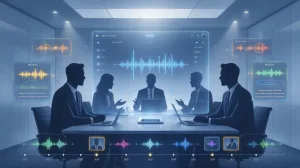
Otter.ai can be a strong choice when real-time collaboration, shared notes, and cloud-based meeting workflows are the priority. Geode is built for a different workflow: local-first transcription and review, with optional cloud AI when users choose it.
1. Architecture: “Convenience” vs. “Isolation”
The Cloud Model (Otter / Fireflies)
When you record with Otter, your audio is uploaded to external servers.
The Pro:
You can access your transcripts from anywhere, on any device.
The Trade-off:
Your data lives in a shared cloud environment. Even with strong safeguards, this means relying on infrastructure, access controls, and evolving privacy terms set by the service provider.
In other words, protection is based on policy and process.
The Local-First Model (Geode)
When you record with Geode, your audio stays on your device by default.
The Pro:
Geode supports local transcription on supported devices, so recordings can be transcribed without relying on continuous internet access. This can be useful for interviews, long recordings, and sensitive material that users prefer to keep in a local workflow.
The Trade-off:
Sharing and collaboration may require an intentional export or handoff rather than an instant shared link. Cloud transcription and summaries remain available when users choose them for a specific task.
The Difference:
All transcription are handled through on-device processing, using your device’s own hardware instead of a remote server.
There’s no step where you need to import to local storage after processing—because the data was never sent elsewhere in the first place.
In short
Cloud tools move your data to where the software is.
Geode keeps the software where your data already lives.
2. Trust: “Policy” vs. “Design”
The Cloud Approach
Cloud services often promise that your recordings won’t be reused without model training consent.
That promise may be sincere—but it still depends on trust:
- That policies won’t change unexpectedly
- That internal access remains well controlled
- That sensitive data isn’t retained longer than intended
You’re trusting people, processes, and documentation.
The Vault Approach
Local processing can reduce the need to upload audio for core transcription and gives users more control over where recordings are processed. It does not remove the need to secure devices, exports, backups, or follow applicable consent, privacy, workplace, and professional requirements.
Geode is local-first by default, with cloud AI options available when users decide they need additional capabilities. Users should review the privacy details of the specific mode they select.
Privacy isn’t enforced by fine print.
It’s enforced by where the software runs.
We don’t frame privacy as a feature toggle.
We treat it as an architectural choice.
| Consideration | Cloud-first transcription | Geode local-first workflow |
| Core processing | Audio is uploaded for cloud processing. | Local transcription is available on supported devices. |
| Internet dependency | Usually requires a connection for upload and processing. | Local transcription can run without continuous internet after setup; cloud features need internet. |
| Privacy and control | Depends on provider policies, settings, and cloud access controls. | Gives users a local option for core transcription; users still manage device and export security. |
| Best use cases | Shared meeting notes, collaboration, real-time team workflows. | Interviews, long-form recordings, field work, and users who prefer a local workflow. |
| Speaker workflow | Varies by provider. | Speaker separation is available on Mac and Windows. |
| Summaries | Often cloud-based and collaboration-oriented. | On-device Smart Summaries on Mac; optional cloud summaries on supported platforms. |
| Cost structure | Often subscription or usage/minute based. | Eligible paid plans include unlimited local transcription; cloud allowances depend on plan. |
3. What This Means for Professionals
So—do you need Geode or Otter?
The honest answer is: many professionals use both.
Different tools solve different problems.
Use Otter.ai (The Cloud) when:
- Collaboration and live sharing matter most
- Sensitivity is low (public talks, internal syncs)
- You work across many devices throughout the day
Use Geode (The Vault) when:
- Use Geode when you record interviews, research conversations, field audio, or other long-form material that you want to review in a local-first workflow.
- Use Geode when you need searchable transcripts and want to find a name, topic, or phrase without replaying the full recording.
- On Mac and Windows, use speaker separation to organize multi-person recordings; review and relabel speaker segments before relying on attribution.
- Use optional cloud transcription or summaries only when that additional processing is useful for the selected task.
The Verdict: Build Your Vault
Cloud transcription is often a sensible choice for collaborative, low-sensitivity meeting workflows. Local-first transcription can be a better fit when you need offline capability, long-form review, or more control over where interview and recording material is processed.
The useful question is not whether cloud or local AI is universally better. It is which workflow helps you capture, review, verify, and share this recording with the right level of control.
Geode is one option for users who want local transcription by default and optional cloud AI when they decide it adds value.
Is Geode fully offline?
Geode supports local transcription on supported devices, so core transcription can run without continuous internet access after setup. Internet may still be needed to download the app or models, verify a subscription, install updates, or use optional cloud features.
Is Geode more private than cloud transcription tools?
Geode offers a local-first transcription workflow, which can give users more control over where recordings are processed. It does not guarantee legal or regulatory compliance; users should secure devices and exports and follow applicable requirements.
When should I choose cloud transcription instead?
Cloud transcription can be a better fit when you need real-time collaboration, shared notes, central access, or cloud-based integrations. Local and cloud approaches solve different workflow needs.
Can Geode help with interview transcription?
Yes. Geode can record or import interviews, create searchable transcripts, and let users search a name, topic, or phrase. Clicking a matching transcript line can take the user to the corresponding point in the audio for review.
Can Geode separate speakers?
Yes. Speaker separation is available on Mac and Windows. It organizes speaker segments but does not replace manual review or confirm a person’s identity.