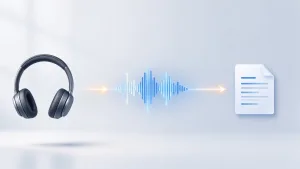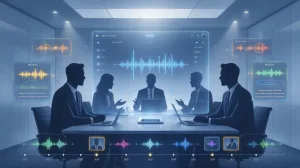
The best private AI meeting assistant is one that keeps audio processing local instead of uploading sensitive recordings to external cloud systems. Many professionals searching for a secure AI meeting transcription are concerned about how much access cloud-based tools require.
Tools like Geode and OpenClaw offer a different approach by separating local audio processing from communication automation. This allows teams to automate meeting workflows while keeping sensitive audio on-device.
For IT teams, executives, therapists, legal professionals, and finance organizations, this model provides stronger privacy controls and a more predictable data flow.The rise of AI meeting assistants has improved productivity, but it has also raised new privacy questions. When you invite an AI tool into Slack, Teams, or Zoom, it typically requires broad permissions to function.
For security-conscious professionals, IT admins, and executives, the concern is straightforward:
Does this tool have too much access?
Is it processing raw audio externally?
Could sensitive discussions be exposed to third-party systems?

If you are asking these questions, you are not alone. The way these systems are designed has a direct impact on how your data is handled.
The Permission Dilemma: How Much Access Is Too Much?
To automate workflows, an AI agent needs permission to read commands and send messages within your communication tools.
On the surface, granting access to a Slack or Teams workspace can feel like expanding the system’s reach into internal conversations. That concern is valid—especially when audio processing happens in the cloud.
This is where the integration between Geode and OpenClaw introduces a different approach.
A Different Approach: Separation of Processing and Delivery
Instead of handling everything in one system, Geode and OpenClaw separate responsibilities between processing and delivery.
Geode handles audio processing locally
Audio recording, speaker separation, and transcription are performed on-device on your Mac. By default, audio and video files are processed locally for transcription software and are not uploaded for AI processing. Network access may still be used for subscription verification and optional diagnostics, depending on configuration.
OpenClaw handles communication workflows
OpenClaw does not process raw audio. It routes the text outputs you request—such as summaries or extracted action items—back into your chat environment. Its behavior depends on workspace permissions and integration setup.
This separation changes the risk model:
audio processing stays local, while automation happens at the text level.
Reclaiming Focus—Without Expanding Data Exposure
Automation is often introduced to reduce repetitive work after meetings—summarizing notes, extracting action items, and sharing updates.
Without automation, teams often spend additional time formatting and distributing information manually. With a structured workflow, much of this can be handled automatically while keeping control over how data is processed.
The key difference here is that automation can be implemented without sending raw audio to external services.
Secure Deployment: Flexible, Controlled Infrastructure
OpenClaw (sometimes deployed as a self-hosted bot, e.g., Clawdbot) can be configured based on your infrastructure preferences.
For teams that want more control, the OpenClaw backend can be deployed on private infrastructure or within a preferred cloud environment, depending on internal requirements and security policies.
At the same time, audio processing remains on-device through Geode. This allows teams to separate where automation runs from where sensitive media is processed.
With appropriate configuration and access controls, this setup can support a more predictable and auditable data flow.
Balancing Automation with Data Control
You shouldn’t have to choose between automating your workflows and protecting your data. When your team is discussing unreleased Q3 financials, product roadmaps, or sensitive HR updates, “hoping” a third-party cloud is secure isn’t a viable strategy.
By combining on-device audio processing with controlled message routing, Geode and OpenClaw reduce uncertainty.
Audio is processed locally for transcription
Text outputs are generated and shared based on user requests
External dependencies are reduced compared to fully cloud-based workflows
This results in a setup with a clearer data path and fewer assumptions about how sensitive content is handled.
Conclusion
Concerns about AI transcription and data access are reasonable—especially in environments where conversations carry sensitive information.A system that separates local processing from communication workflows offers a more controlled alternative. Instead of relying entirely on cloud-based pipelines, it allows teams to keep audio processing on-device while still benefiting from automation inside their existing tools.
Last reviewed: September 2026
What is a private AI meeting assistant?
A private AI meeting assistant processes recordings locally or minimizes cloud exposure instead of uploading all meeting audio to external servers.
Can AI meeting assistants work without uploading audio?
Yes. Local-first transcription tools like Geode can process audio directly on-device while only sharing text outputs when needed.
Why do companies prefer local transcription?
Local transcription gives organizations stronger privacy controls and reduces dependence on external cloud infrastructure.
What is the benefit of separating transcription from automation?
Separating processing from automation allows audio to stay local while summaries and action items can still be shared through communication tools.
Is offline transcription software more secure?
Offline transcription software can reduce external exposure because recordings do not need to be continuously uploaded for processing.