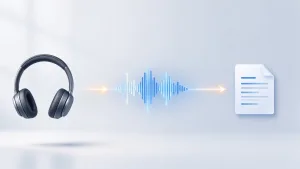
Language immersion is effective when the input is understandable, repeatable, and close enough to your level that your brain can connect sound with meaning. Many learners search for language immersion because they want to stop memorizing isolated phrases and start understanding real speech. Tools like Geode can make that process easier by turning real audio into transcripts, translations, and reviewable study material.
The honest answer is not “just surround yourself with the language and magic will happen.” I have seen learners play hours of foreign podcasts in the background and still feel stuck. Immersion helps most when you can pause, check what was said, and return to useful lines later.
What Is Language Immersion?
Language immersion means spending time with the language as it is actually used: conversations, podcasts, videos, lessons, music, interviews, news, and everyday speech. Instead of only studying grammar rules, you repeatedly meet the language in context.
For a beginner, immersion does not have to mean moving abroad or deleting every app in your native language. It can start with ten minutes of Spanish listening practice, a French podcast episode, or a YouTube video in Japanese with a transcript nearby.
Why Language Immersion Works Better Than Memorizing Alone
Flashcards can help you recognize words, but immersion teaches you how those words behave. You hear rhythm, speed, hesitation, tone, and the small phrases that textbooks often skip.
For example, a learner may know the words “give,” “me,” and “hand,” but still miss the real meaning of “Can you give me a hand?” Immersive language learning gives you context. It helps your brain move from translation to recognition.
That is why language learning with real audio can feel so powerful. You are not just learning definitions. You are learning how people actually use the language.
Why Immersion Alone Can Feel Frustrating
The problem is that real audio can move too fast. A podcast host does not slow down because you missed a verb. A language app (like Duolingo) may replay the sentence but not show the original text. A video may have captions, but they can be incomplete or wrong.
When learners cannot check what they heard, they often fall into a loop: replay, guess, replay again, give up. That is not a discipline problem. It is a feedback problem.
For beginners, language immersion works best when it becomes understandable input. You need enough support to notice the words, connect them with meaning, and review them later.
How Transcripts Make Immersion More Useful
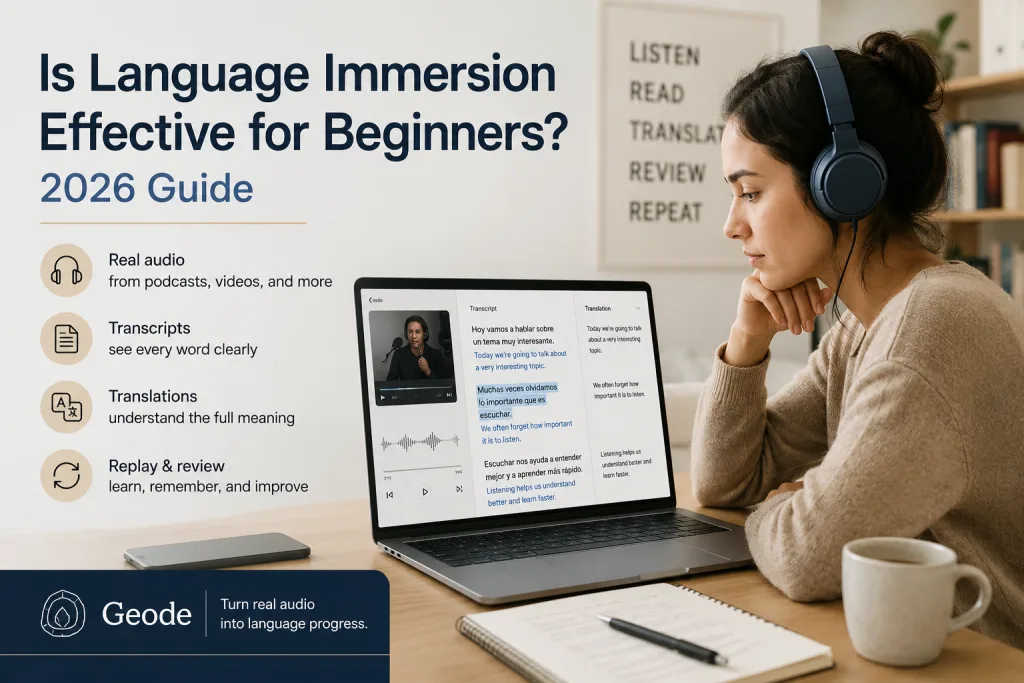
A transcript changes the entire experience. You can listen first, then read the exact line, then listen again with more confidence. Instead of wondering whether you heard the word correctly, you can confirm it.
This is where Geode fits naturally. If a podcast, lesson, or video does not provide a transcript, Geode can help turn supported audio into readable text. From there, you can translate difficult lines, replay confusing sections, and save useful phrases for review.
The point is not to avoid listening. The point is to make listening easier to learn from.
How to Use Geode for Immersive Language Learning
A simple workflow works better than a complicated study system:
- Choose one short piece of real audio, such as a podcast clip, video, or lesson.
- Listen once without stopping, even if you miss parts of it.
- Use Geode to create a transcript from supported audio.
- Read the transcript and mark the lines you could not catch.
- Translate the transcript to help understanding.
- Replay those lines until the sound starts matching the text.
This keeps the emotional benefit of immersion while adding the structure beginners need.
Best Immersion Workflow: Listen, Read, Translate, Review
The best immersion routine is not passive. It is layered.
First, listen for the general idea. Then read the transcript. Then translate the hard parts. Finally, replay the same audio while following the text. Over time, the same words stop feeling like noise and start sounding familiar.
That is when language immersion becomes more than exposure. It becomes practice you can repeat.
Conclusion
Language immersion is effective, but only when you can understand enough to keep learning. Beginners do not need perfect comprehension. They need real audio, a way to check what was said, and a reason to come back to the material.
For that reason, transcripts can make immersion much more practical. Geode helps by turning difficult audio into text you can read, translate, replay, and review. That small change can make real-world language input feel less intimidating and much more useful.
Is language immersion effective for beginners?
Yes. Language immersion can be effective for beginners when the audio is understandable and reviewable. Transcripts help beginners confirm what they heard instead of guessing.
What is the best way to learn a language by immersion?
The best way is to combine real audio with support. Listen first, then use transcripts, translation, and replay to review the phrases you missed.
Can I use podcasts for language immersion?
Yes. Podcasts are useful for language immersion because they expose you to real speech. They work even better when you can transcribe and review difficult sections.
Do transcripts help with immersive language learning?
Yes. Transcripts make immersive language learning easier by connecting sound with written text, which helps listening practice and vocabulary review.
How does Geode help with language immersion?
Geode helps with language immersion by turning supported audio into transcripts and translations you can replay and review during language practice with the audio you choose.